

OSHA Scaffolding Violations on NJ Job Sites: How They Support Your Injury Claim
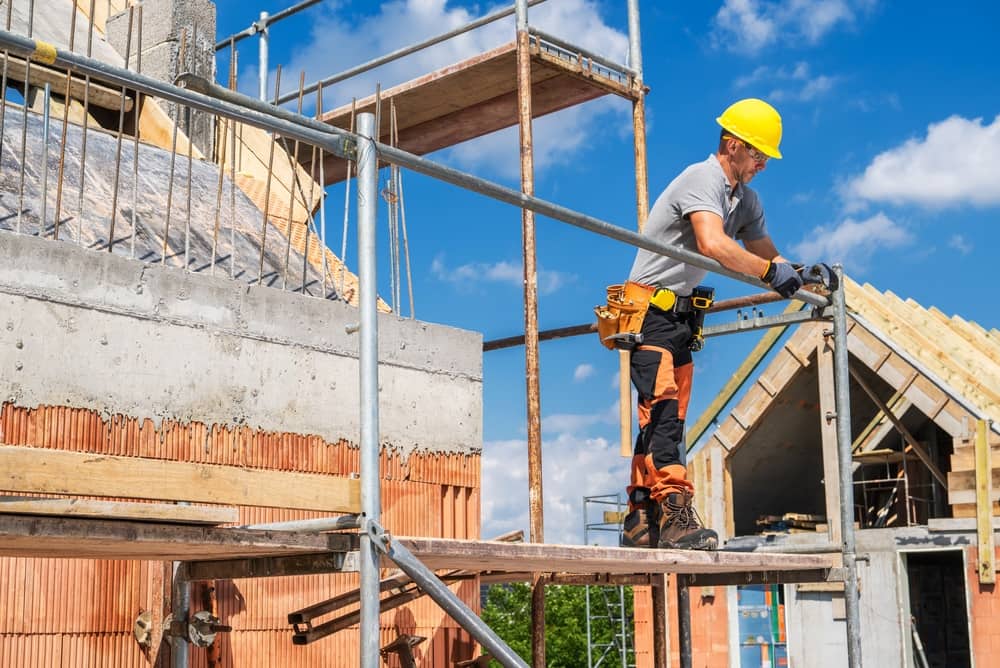
Scaffolding falls are one of the most common and serious dangers in construction work, and OSHA scaffolding violations on NJ job sites often play a central role in how injury claims are built and proven.
When a worker is hurt because a scaffold was put together wrong, missing guardrails, overloaded, or never inspected, those failures usually trace back to specific rules set by the Occupational Safety and Health Administration (OSHA).
Understanding how those rules connect to your right to recover compensation can make a real difference in your case.
Key Takeaways About OSHA Scaffolding Violations at Job Sites
- OSHA enforces federal scaffolding safety standards under 29 CFR 1926 Subpart L, which apply to nearly every construction site in New Jersey.
- A documented OSHA violation can support a personal injury or third-party claim by showing that a known safety rule was broken.
- Common scaffolding violations include missing guardrails, improper planking, unsafe access, and lack of fall protection above ten feet.
- Injured construction workers in New Jersey may have rights under both workers’ compensation and personal injury law.
- Evidence preservation, including photos, witness statements, and OSHA inspection records, often decides the strength of a case.
How Do OSHA Scaffolding Violations Affect a New Jersey Injury Claim?
If a scaffolding fall hurt you on a New Jersey job site, OSHA scaffolding violations can serve as powerful evidence that your employer or a contractor failed to keep the site safe, which can strengthen your injury claim.
- OSHA scaffolding rules set the minimum safety standards for construction sites
- Citations and inspection reports may help prove negligence in a civil case
- Workers can pursue both workers’ compensation and a third-party injury claim in some situations
- A documented OSHA violation does not automatically win your case, but it carries real weight
What Are OSHA Scaffolding Standards and Why Do They Matter?
OSHA scaffolding standards are federal safety rules that tell contractors how scaffolds must be built, used, and inspected to protect workers from falls and collapses. These rules apply to virtually every construction job site in New Jersey, from small renovations in Fort Lee to large commercial builds near the George Washington Bridge or along Route 4 in Hackensack.
The main scaffolding rules live in 29 CFR 1926 Subpart L, the federal regulation that covers scaffolds used in construction. The rules cover things like:
- Minimum load capacities for scaffolds and their components
- Guardrail height and strength requirements
- Safe access points such as ladders or stair towers
- Fall protection for work above ten feet
- Daily inspections by a competent person before each shift
When a contractor ignores these rules, the danger to workers goes up sharply. Falls from elevation remain one of the leading causes of construction deaths nationwide, according to the U.S. Bureau of Labor Statistics.
That is why a scaffolding violation is not just a paperwork issue. It often points to a real and avoidable hazard that hurt a real person.
OSHA standards matter because they create a clear benchmark. If a scaffold did not meet the standard and a worker was hurt because of that gap, the violation becomes a building block for showing fault.

Common OSHA Scaffolding Violations on New Jersey Construction Sites
Some scaffolding violations come up again and again on job sites across northern New Jersey. Knowing what they look like helps explain why so many scaffold falls are not freak accidents but predictable results of corner-cutting.
Frequent violations we see in construction injury cases include:
- Missing or inadequate guardrails on open sides and ends of platforms
- Planks that are split, warped, or not properly secured
- Scaffolds built on uneven or soft ground without base plates or mud sills
- Lack of personal fall arrest systems on suspended or two-point scaffolds
- Overloading scaffolds beyond their rated capacity
- No daily inspection by a trained competent person
- Workers climbing cross-bracing instead of using safe ladder access
- Scaffolds erected too close to power lines
Each of these failures maps to a specific OSHA rule. For example, the requirement for fall protection at ten feet or above is set out in 29 CFR 1926.451(g). When that rule is ignored, and a worker falls from a platform fifteen feet up, the connection between the violation and the injury is hard to dispute.
These patterns show up at job sites of every size, from townhouse projects in Bergen County to high-rise work in the Bronx. The size of the project does not change the rules, and it does not change a worker’s right to a safe place to work.
How Does an OSHA Violation Support a Personal Injury Claim?
An OSHA violation supports a personal injury claim by giving you documented proof that a specific safety rule was broken, which courts and juries often treat as strong evidence of negligence. In simple terms, it helps answer the key question: did someone fail to act with reasonable care, and did that failure cause the injury?
Here is how OSHA findings typically come into play:
- An OSHA inspector visits the site after a serious injury or fatality
- The inspector documents conditions, takes photos, and interviews witnesses
- Citations are issued for any rules that were broken
- Those citations and the inspection report become part of the public record
- Your attorney can use that record to support claims of negligence against responsible parties
In New Jersey, courts have long recognized that violations of safety statutes and regulations can be used as evidence of negligence in civil cases. While an OSHA citation does not automatically prove liability, it often shifts momentum in a case because it shows that a recognized authority looked at the site and found a serious problem.
It is also important to know that OSHA citations usually go to the employer. However, in a third-party injury claim, you may be able to bring action against general contractors, property owners, scaffolding manufacturers, or other subcontractors whose negligence contributed to the fall.
Workers’ Compensation vs. Third-Party Injury Claims After a Scaffold Fall
Many injured construction workers in New Jersey do not realize they may have two separate paths to recovery after a scaffold accident. Knowing the difference can change how much you ultimately recover.
The two main paths look like this:
- Workers’ compensation: A no-fault system that pays for medical care and a portion of lost wages, regardless of who caused the accident, but does not pay for pain and suffering.
- Third-party personal injury claim: A claim against someone other than your direct employer, such as a general contractor, property owner, equipment maker, or another subcontractor whose negligence contributed to your fall. These claims can include pain and suffering, full lost earnings, and other damages.
Workers’ compensation in New Jersey is governed by the New Jersey Workers’ Compensation Act, which the New Jersey Department of Labor and Workforce Development administers. Filing a workers’ compensation claim does not stop you from also pursuing a third-party case when one is available.
A scaffolding accident is often the kind of construction injury where both claims come into play. For example, if your employer’s crew set up the scaffold but the general contractor failed to coordinate safety, or if a defective scaffold component caused the fall, more than one party may share responsibility. Looking at every possible source of recovery is part of a careful case review.
What Evidence Strengthens a Scaffold Injury Case?
Strong scaffold injury cases are built on strong evidence, gathered as early as possible. The more documentation you can preserve, the harder it becomes for insurance companies and defense lawyers to brush off what happened.
Helpful evidence in a scaffolding fall case includes:
- Photos and video of the scaffold, the fall location, and any defects
- Names and contact information for coworkers and other witnesses
- Copies of OSHA citations, inspection reports, and any internal incident reports
- Medical records that connect your injuries to the date and mechanism of the fall
- Pay stubs and tax records showing lost income
- Project documents like contracts, safety plans, and toolbox talk records
- Photographs of any equipment failures, such as broken planks or missing pins
Time matters here. Job sites change quickly. A scaffold that collapsed on a Tuesday might be cleared away or rebuilt by Friday, so getting documentation early is one of the most important steps after a serious injury.
Speaking with an attorney early in the process can help make sure key evidence is preserved while memories are fresh and the site is still close to its original condition.

Who Can Be Held Responsible for a Scaffolding Accident?
A scaffolding accident usually involves more than one company on a job site, and figuring out who is legally responsible takes a close look at how the work was set up. In many cases, several parties share some level of fault, which can open the door to a broader recovery.
Parties who may be responsible for a scaffold fall include:
- The general contractor in charge of overall site safety
- Subcontractors who built, modified, or used the scaffold
- The property owner, in certain situations
- Scaffolding rental or supply companies
- Manufacturers of defective scaffold components
- Engineering or safety consultants hired for the project
Sorting this out is a detailed process. It often involves reviewing contracts, OSHA records, photographs, and interviews with crew members. The goal is to identify every party whose conduct fell short and to make sure their share of responsibility is part of the case.
FAQs for OSHA Scaffolding Violations on NJ Job Sites
Below are answers to some of the most common questions we hear from injured workers and their families about scaffolding violations and injury claims.
Does an OSHA citation automatically prove my case?
An OSHA citation does not automatically prove your case, but it is often very persuasive evidence. It shows that a federal agency reviewed the site and found a real safety problem. To recover compensation, you still need to show that the violation contributed to your injury and that the responsible parties owed you a duty of care, which is where careful legal work comes in.
How long do I have to file a scaffolding injury claim in New Jersey?
New Jersey generally gives you two years from the date of the injury to file a personal injury lawsuit, under N.J.S.A. 2A:14-2. Workers’ compensation has its own shorter notice deadlines, often within a couple of weeks of the injury. Because every situation is different, it is best to speak with an attorney as soon as possible so no deadline is missed.
Can I file a claim if I was partly at fault for the fall?
Yes, in many situations, you can still recover compensation even if you were partly at fault. New Jersey follows a modified comparative negligence rule, which generally allows recovery as long as you are not more than 51 percent at fault. Your total award may be reduced by your share of responsibility, but partial fault does not always bar a claim.
What if my employer pressured workers to skip safety steps?
Pressure to ignore safety rules is unfortunately common on rushed projects, and it can be an important part of a case. Statements from coworkers, text messages, emails, and meeting notes can help show how that pressure played out.
While you usually cannot sue your direct employer outside of workers’ compensation, a culture of skipped safety steps may still affect claims against general contractors or other third parties.
Do undocumented workers have rights after a scaffolding accident?
Workers in New Jersey generally have the right to workers’ compensation and to bring personal injury claims regardless of immigration status. Safety laws and many compensation rules protect all workers on a job site. Fear of immigration questions should not stop an injured worker from learning about their legal options.
Can my family bring a claim if a loved one died in a scaffold accident?
Yes, surviving family members may have the right to bring a wrongful death claim and a survival action under New Jersey law. These claims can address medical expenses, funeral costs, lost financial support, and other losses suffered by the family. The rules and time limits are specific, so a prompt conversation with a lawyer is important.
What if the scaffold was rented or supplied by an outside company?
When a scaffold is rented, supplied, or installed by a separate company, that company may share responsibility for any defects or unsafe setups. Rental and supply agreements, maintenance logs, and inspection records become especially important. These records can show whether equipment was in safe condition when it left the supplier and whether anyone signed off on a setup that violated OSHA rules.
Talk With Us About Your Scaffolding Injury Claim Today
If you were hurt in a scaffolding fall or another construction accident on a New Jersey or Bronx job site, you do not have to figure out the next steps alone. We are ready to listen to your story, review the OSHA history, and explain your options in plain language.
Call Maggiano, DiGirolamo & Lizzi, P.C. at 201-585-9111 for our Fort Lee or Hackensack office, or at 212-543-1600 for our Bronx office, to set up a free consultation. We work on a contingency fee basis, which means there is no cost to you unless we recover compensation in your case.