
OSHA Violations as Proof of Negligence in Your Construction Injury Case
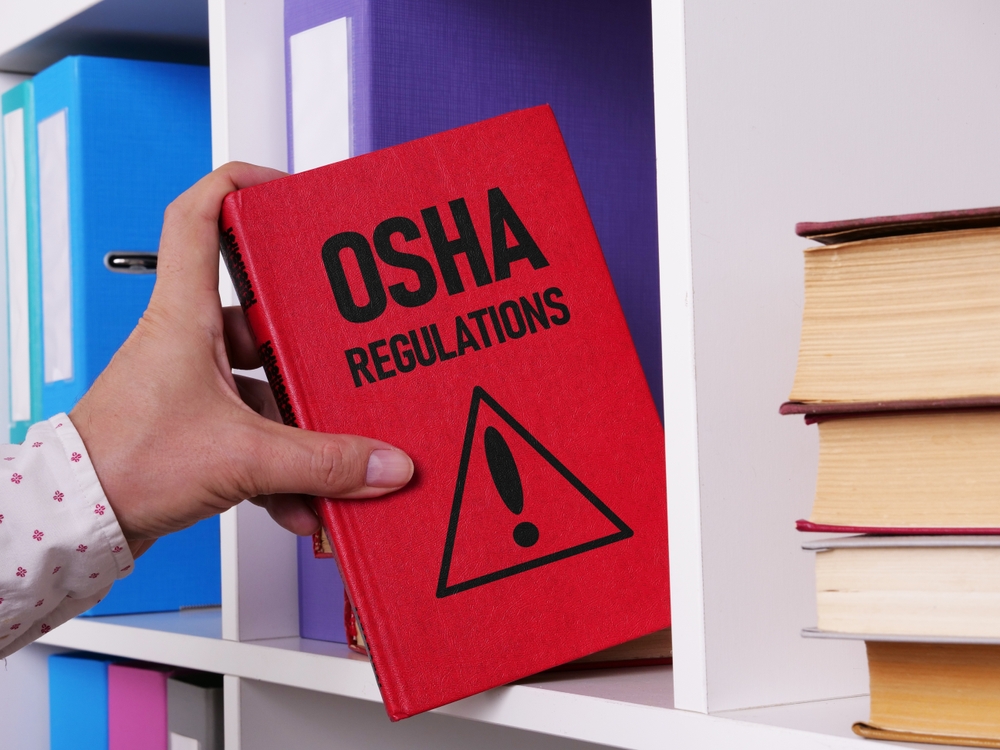
A formal citation from the Occupational Safety and Health Administration (OSHA) can serve as powerful evidence in your construction injury case. An OSHA report that documents safety failures provides a strong foundation for proving another party’s negligence caused your harm.
When pursuing a construction accident lawsuit, official documentation of OSHA violations substantiates your claim that a contractor or property owner failed to provide a safe work environment.
An established safety violation introduces a government agency’s findings into the legal equation, allowing your attorney to build a more compelling argument for accountability and compensation on your behalf.
Key Takeaways for OSHA Violations in a Construction Accident Lawsuit
- An OSHA citation for a safety rule infraction helps establish negligence.
- The legal doctrine of negligence per se may allow a violation of an OSHA regulation to function as direct proof of a breach of duty.
- OSHA investigation reports contain detailed findings, witness statements, and conclusions that can support your injury claim.
- The type of violation can significantly influence the strength of your negligence argument.
- A personal injury lawsuit based on an OSHA violation is separate from a workers’ compensation claim and may allow you to recover damages not covered by workers’ comp.
Understanding OSHA’s Role in Your Injury Claim
The Occupational Safety and Health Administration acts as a federal watchdog for workplace safety. Its primary mission involves setting and enforcing safety standards to protect workers across the country.
When a serious accident occurs, OSHA often launches an investigation to determine if the employer complied with federal safety regulations. An OSHA investigation focuses on regulatory enforcement.
Agency inspectors interview witnesses, examine the accident site, and review company safety records. If they find that a company broke safety rules, they issue citations and may impose fines.
Your personal injury claim, however, has a different goal. A lawsuit seeks financial compensation for the full range of your damages, including pain and suffering, medical expenses, and lost income.
While OSHA’s purpose is to penalize employers for non-compliance, your attorney’s purpose is to use the findings of their investigation to prove your case. A documented finding of OSHA violations becomes a powerful tool in civil court.
How an OSHA Violation Establishes Negligence
Proving negligence is the cornerstone of any personal injury claim. Your lawyer must show that a third party, such as a general contractor or equipment manufacturer, had a duty to keep you safe, breached that duty, and caused your injuries as a result.
An official OSHA citation can strongly support the argument that a breach of duty occurred.
The Concept of Negligence Per Se
In certain legal situations, the violation of a public safety statute can demonstrate negligence in itself. This legal principle, known as negligence per se, sometimes allows a violation of a safety rule to serve as direct evidence of negligence.
However, New Jersey courts generally treat OSHA violations as persuasive evidence of negligence rather than automatic proof.
An attorney can argue that when a company violates a specific OSHA regulation designed to prevent a particular type of accident, and that exact type of accident occurs, the violation provides strong evidence that the company breached its duty of care.
For example, if OSHA requires guardrails on any platform above a certain height and your employer failed to install them, your fall from that platform may qualify as strong evidence of negligence. Your attorney uses the safety rule itself to help define the standard of care the company failed to meet.
This approach can simplify your case by making the safety violation key evidence of unreasonableness, allowing your attorney to focus on connecting that violation to your injuries.
Using the OSHA Report as Powerful Evidence
An official OSHA investigation report provides a detailed, third-party account of the circumstances surrounding your accident. Attorneys often rely on OSHA investigation reports to help build a strong negligence case.
The contents often provide a clear roadmap for identifying safety failures and potential liability.
A typical OSHA report contains crucial information, such as:
- Investigator’s Findings: This section provides a narrative that describes the accident sequence and identifies the causal factors.
- Specific Violations: The report includes a list detailing the exact OSHA standards that the employer broke.
- Witness Interviews: Investigators provide summaries of statements from coworkers and supervisors who saw what happened.
- Photographs and Diagrams: The file contains visual documentation of the hazardous conditions at the accident site.
Your lawyer incorporates these elements into your lawsuit to show a jury exactly how a safety failure led to your injuries. Because OSHA is an independent federal agency, its reports carry significant credibility that can strengthen your claim.
Differentiating Violation Types
OSHA classifies violations based on their severity and the employer’s awareness of the hazard. This classification may add weight to your personal injury claim. A construction accident lawyer knows how to highlight the type of OSHA violation to strengthen your case.
The primary types of violations include:
- Willful Violation: The most severe classification, this violation happens when OSHA finds that an employer intentionally and knowingly disregarded a legal requirement or acted with plain indifference to employee safety.
- Serious Violation: This violation applies when a workplace hazard poses a risk of an accident likely to result in death or serious physical harm, and the employer knew or should have known about the hazard.
- Other-Than-Serious Violation: These violations relate to a hazard that affects job safety and health but is unlikely to cause death or serious physical harm.
A willful violation can provide especially compelling evidence of negligence because it demonstrates a conscious disregard for worker safety, making it much harder for a company to claim the accident was unforeseeable.
Even a serious violation strongly supports your claim that the employer failed in its basic duty to protect you from harm.
Common Challenges With OSHA Violations and a Construction Accident Lawsuit
Relying on an OSHA citation as evidence of negligence is a powerful strategy, but it can present certain legal complexities. Defense attorneys and insurance companies may raise challenges to minimize their client’s liability.
A construction injury lawyer anticipates these tactics and prepares a strong response.
Common challenges you may face include:
- Contested Violations: Employers have the right to contest OSHA citations. If they do, it can delay the final report and create uncertainty. Your lawyer monitors the OSHA case and continues to build your personal injury claim with other evidence.
- Third-Party Fault: In New Jersey, a defendant in a lawsuit can try to blame a third party that may not even be part of your case. An example is the general contractor blaming a subcontractor or an equipment manufacturer.
- Causation Arguments: The defense may acknowledge the safety violation but argue that it didn’t actually cause your specific injury. Your attorney must draw a clear and persuasive line from the breach to the harm you suffered, often using expert analysis and medical records.
- Limited Admissibility: In some cases, a court may limit how an OSHA violation can be presented to a jury. Experienced attorneys are familiar with the rules of evidence and know how to frame a violation as evidence of the standard of care in the construction industry.
Your lawyer addresses these challenges by conducting a thorough, independent investigation to gather additional evidence, interview witnesses, and hire safety experts to reinforce the connection between the safety failure and your injuries.
How a Construction Accident Lawyer Helps With Your OSHA Violation Claim
A construction accident attorney does more than just file paperwork. They act as your advocate, investigator, and strategist, focused on building the strongest possible case on your behalf.
The attorneys at Maggiano, DiGirolamo & Lizzi, P.C. have experience investigating OSHA violations and using them to strengthen claims.
Your attorney takes specific actions to advance your case, such as:
- Investigation: Your lawyer launches an immediate investigation to preserve evidence from the construction site, photograph the scene, and identify all potential witnesses before conditions change or memories fade.
- Documentation: Your legal team formally requests the complete OSHA investigation file, including the final report, citations, witness statements, and any related evidence gathered by federal investigators.
- Causation: An attorney works with engineers, safety experts, and medical professionals to establish a direct causal link between the documented OSHA violation and the injuries you sustained.
- Liability: A lawyer identifies all potentially liable parties, which on a construction site can include the property owner, general contractor, various subcontractors, architects, and equipment manufacturers.
- Case Building: They synthesize all the evidence—from the OSHA report to expert testimony—to construct a compelling narrative that clearly demonstrates another party’s negligence and their responsibility for your damages.
- Negotiation: Your representative handles all communications and negotiations with insurance companies, fighting to secure a settlement that fully accounts for your past and future medical needs, lost income, and suffering.
FAQ for OSHA Violations in a Construction Accident Lawsuit
How Does an OSHA Citation Affect My Construction Injury Case?
An OSHA citation can strengthen your construction injury case. It serves as independent, authoritative evidence that a party responsible for the work site failed to meet federally mandated safety standards. Your lawyer can use the citation to help establish negligence.
Can I Sue My Employer Directly for an OSHA Violation?
In most cases, the workers’ compensation system prevents you from directly suing your employer, even if they committed an OSHA violation. However, you can file a personal injury lawsuit against other negligent parties on the job site, known as third parties.
These can include general contractors, subcontractors from other companies, property owners, or equipment manufacturers whose negligence contributed to your accident.
What Happens if My Employer Fixes the Violation After My Accident?
Subsequent remedial measures, or an employer fixing a hazard after an injury, generally cannot be used as proof of their prior negligence. However, this action can be relevant for other reasons in your case.
Your attorney can advise you on how this might impact your specific OSHA violations in a construction accident lawsuit.
What Is the Difference Between a Workers’ Compensation Claim and a Lawsuit Involving an OSHA Violation?
A workers’ compensation claim provides no-fault benefits for medical bills and a portion of lost wages, but it doesn’t cover damages like pain and suffering. An OSHA violation can strengthen a construction accident lawsuit against a third party, like a subcontractor.
A third-party lawsuit allows you to seek compensation for the full scope of your losses from a negligent party other than your direct employer. Maggiano, DiGirolamo & Lizzi, P.C. can help you pursue both a workers’ comp claim and a third-party lawsuit simultaneously.
How Does a Lawyer Prove a Connection Between the OSHA Violation and My Injury?
Your attorney shows the connection (causation) between the OSHA violation and your injury by using evidence. They’ll use the details in the OSHA report, the opinions of workplace safety experts, your medical records, and witness testimony.
This combined evidence creates a clear picture showing that the safety failure directly led to the accident that caused your specific injuries.
Your Case Is More Than a Citation
An OSHA violation is a powerful piece of evidence, but it represents just one part of your story. The true focus is on your recovery, your family, and your ability to regain stability after a serious injury.
Using that OSHA report effectively requires turning it from a regulatory document into a clear narrative of negligence that a judge and jury can understand. The lawyers at Maggiano, DiGirolamo & Lizzi, P.C. know how to investigate OSHA violations and use them to strengthen claims.
If you were injured on a construction site, contact Maggiano, DiGirolamo & Lizzi, P.C. at (201) 585-9111 to discuss your case.