

Proving the Property Owner Knew About the Dangerous Condition
The success of your premises liability claim hinges on more than just demonstrating you were hurt. It requires a specific and challenging task: proving the property owner knew about the hazard or reasonably should have known about it.
Without this crucial element, establishing property owner negligence becomes nearly impossible, potentially leaving you to face your recovery costs alone.
Your ability to recover compensation depends directly on gathering the right evidence to establish what the owner knew and when they knew it.
Key Takeaways for Proving the Property Owner Knew About the Hazard
- Your entire case hinges on demonstrating that the property owner had either actual notice or constructive notice of the dangerous condition on their property.
- In a premises liability claim, the law considers notice to an employee as notice to the property owner, making the business legally responsible for a hazard that an employee knew about.
- Maintenance logs, video footage, and witness statements are fundamental tools for proving the property owner knew about the hazard.
- A personal injury attorney conducts a thorough investigation to uncover evidence and build a compelling argument for property owner negligence.
The Core Challenge in a Premises Liability Claim
When you pursue a premises liability claim, you must do more than show that a dangerous condition on the property caused your injury. The central challenge involves demonstrating the owner’s awareness of the risk.
Legally, property owners have a duty to keep their premises reasonably safe for visitors. This duty is breached not just by the existence of a hazard, but by their failure to correct it or warn people about it.
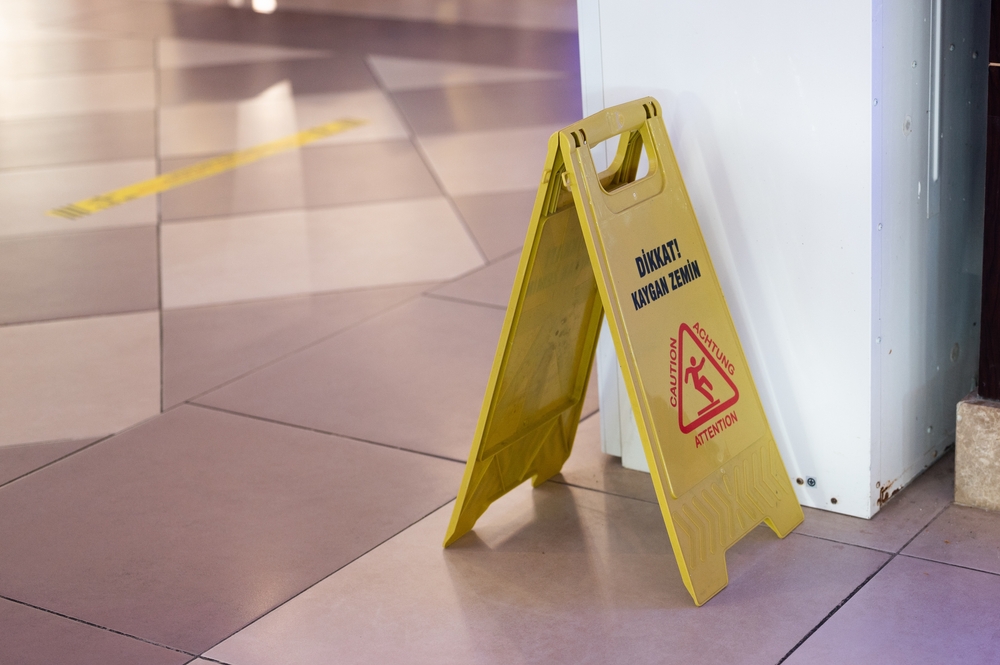
For example, if a leak from a broken freezer drips onto a supermarket aisle in a busy Teaneck shopping center, your case depends on showing how long that water was on the floor.
Proving the property owner knew about the hazard requires a thorough investigation into the circumstances surrounding your injury.
Distinguishing Between Actual and Constructive Notice
Proving a property owner’s knowledge of a dangerous condition hinges on the legal concept of notice. The law accepts two specific forms of notice that satisfy this requirement: actual notice and constructive notice.
Both serve to establish that the property owner had an opportunity to remedy the dangerous condition on the property before it led to an injury. The type of evidence you need often depends on which form of notice applies to your situation.
What Constitutes Actual Notice?
Actual notice is the more straightforward of the two concepts. It means the property owner or one of their employees had direct knowledge of the specific hazard that caused your injury.
An attorney establishes actual notice by finding direct proof that someone with responsibility for the property was told about the problem or saw it themselves.
Common examples include:
- Previous Complaints: Another customer or tenant reported the slippery floor or broken stairs to management.
- Employee Awareness: An employee saw the spill, broken pavement, or icy patch but failed to clean it up or place a warning sign.
- Owner’s Own Records: Internal work orders or emails show the owner was aware of the need for a repair.
- Failed Inspections: A prior safety inspection noted the specific violation or dangerous condition on property.
Establishing Constructive Notice
More often, cases rely on proving constructive notice. This legal principle states that even if the owner didn’t have direct knowledge, they should have known about the hazard through the exercise of reasonable care.
It addresses situations where a danger persists for such a duration that a diligent owner would have inevitably discovered and corrected it. The effort to prove that the property owner was aware of the hazard through constructive notice is a detailed and fact-intensive process.
For example, in a premises liability claim involving a spill, your lawyer investigates when the spill occurred versus the property’s inspection schedule. If a hazard was present for hours or even days in an area that employees frequently visit, the argument for constructive notice becomes much stronger.
Critical Evidence for Proving the Property Owner Knew About the Hazard
A successful premises liability claim is built on a foundation of solid evidence. Your word alone is often not enough to counter the property owner’s defense. Your lawyer’s primary role is to locate, preserve, and present objective proof that validates your account.
The task of proving the property owner knew about the hazard depends on this methodical gathering of facts.
The Power of Maintenance Records and Inspection Logs
One of the first actions the attorneys at Maggiano, DiGirolamo & Lizzi, P.C. take is to request the property owner’s internal documents. These records offer a behind-the-scenes look at the property’s safety procedures and can be instrumental in proving property owner negligence.
Getting maintenance records after a slip and fall can reveal a pattern of neglect or provide a timeline for the hazard.
These documents might include:
- Inspection Logs: These sheets show when employees are supposed to check areas like restrooms or aisles and if they completed those checks.
- Maintenance and Repair Orders: A history of work orders can show if the owner knew about a recurring problem, like a leaky roof or a broken floor tile.
- Employee Shift Schedules: These records help identify which employees were working at the time of your injury and may have witnessed the hazard.
- Internal Communications: Emails or memos between staff members sometimes discuss known safety issues on the property.
Using Witness Testimony To Establish a Timeline
Witnesses, such as other customers, tenants, or former employees, can often provide crucial details to prove the property owner knew about the hazard. They may have seen the hazard before you did or overheard conversations among staff about the dangerous condition on property.
A witness may be able to confirm how long a spill was on the floor or that a particular patch of ice near an entrance in Palisades Park remained for days without being salted. Their testimony can directly counter a property owner’s claim that the hazard appeared suddenly and without warning.
Your attorney can locate and interview these witnesses to formally record their observations.
Video Surveillance Catches Negligence in Action
Video cameras are nearly everywhere, from the shopping centers along Route 4 in Hackensack to the lobbies of apartment buildings in Englewood. Surveillance footage is one of the most powerful pieces of evidence available.
Video footage can definitively show how long a hazard was present, whether employees walked past it, and the circumstances of your fall.
An attorney acts immediately to preserve this evidence; property owners often have policies to record over footage within a short period. Your lawyer can send a formal spoliation letter demanding that the owner preserve any and all video recordings from the time of the incident.
The “Time on Floor” Rule and Its Impact
In many slip and fall cases, a concept known as the “time on floor” rule becomes a deciding factor. This rule directly relates to the idea of constructive notice. It poses a simple yet powerful question: how long was the substance or object on the floor before the injury occurred?
The answer helps a jury or insurance adjuster determine if the property owner had a reasonable amount of time to discover and address the problem.
If a carton of milk breaks in a grocery store and an employee is stocking shelves in the same aisle, a slip two minutes later might not indicate negligence.
However, if that same spill remains unaddressed for 45 minutes while several employees pass by, the argument for constructive notice becomes very strong.
Proving the duration of the hazard requires investigative work, and your legal team may use circumstantial evidence to build a case.
Methods used to establish the timeline include:
- Witness Accounts: Someone else may have seen the spill a half-hour before you fell.
- Video Evidence: Security footage provides a clear and objective timestamp.
- Physical Properties of the Substance: Dirty footprints or shopping cart tracks through a spill indicate that it was present for some time.
Understanding and applying the “time on the floor” rule in New Jersey is a nuanced aspect of a premises liability claim. A lawyer experienced in these cases knows how to use this principle effectively to demonstrate property owner negligence and strengthen your position.
How a Lawyer Proves the Property Owner Knew About the Hazard
Attempting to handle a premises liability claim on your own places you at a significant disadvantage, particularly because the other side has insurance adjusters and legal teams dedicated to minimizing their liability.
An experienced personal injury lawyer undertakes the complex task of proving that the property owner was aware of the hazard but failed to act.
Here are specific ways an attorney helps:
- Official Investigation: A lawyer launches an immediate and formal investigation to uncover all facts related to your injury and the property’s condition.
- Evidence Preservation: Your attorney sends legal notices to the property owner, demanding they preserve crucial evidence like video surveillance, accident reports, and maintenance records.
- Witness Identification and Interviews: Maggiano, DiGirolamo & Lizzi, P.C. has the resources to identify, locate, and interview witnesses who saw the dangerous condition on property or your accident.
- Navigating Legal Procedures: Your lawyer handles all filings, deadlines, and communications, ensuring your premises liability claim is built correctly from the start.
- Establishing Notice: Our skilled lawyers know exactly what to look for when reviewing documents and testimony to establish either actual and constructive notice.
FAQ for Proving the Property Owner Knew About the Hazard
How Do You Prove How Long a Hazard Existed Before an Accident?
Attorneys use several methods to establish a timeline for a hazard, but video surveillance often provides the most direct proof. Witness statements from others who saw the danger earlier are also compelling.
In some cases, your lawyer may use circumstantial evidence, such as footprints through a spill or the condition of the substance itself, to argue it had been there for a significant period.
What Is the Property Owner’s Duty To Inspect for Hazards?
A property owner’s duty to inspect for hazards requires them to conduct regular and reasonable inspections of their premises to identify and correct dangers. What counts as “reasonable” depends on the type of property.
A high-traffic retail store in a Lodi shopping plaza has a higher duty to inspect its floors frequently than the owner of a small, private office building. A lawyer will investigate the property’s inspection policies and practices to see if they met this legal duty.
Does It Matter if an Employee Knew About the Danger Instead of the Owner?
Yes, it matters greatly, and it helps your case because in the context of a premises liability claim, the law considers notice to an employee as notice to the property owner. If a store clerk sees a spill and fails to clean it up, the business is legally considered to have actual notice of the hazard.
This principle, known as vicarious liability, makes the employer responsible for the negligence of its employees.
Can a Property Owner Use a Lack of Prior Accidents as a Defense?
Property owners sometimes argue that because no one else was injured by the same hazard, they had no reason to believe it was dangerous. While they can make this argument, it’s not a conclusive defense.
The core question isn’t whether someone else was hurt, but whether the condition itself was a foreseeable danger that the owner should have addressed. A history of accidents can strengthen a claim, but a lack of them doesn’t automatically absolve the owner of property owner negligence.
Do Property Owners Have To Turn Over Their Security Camera Footage?
Property owners have no obligation to voluntarily give you evidence that could damage their case. Your attorney sends a formal legal demand called a spoliation letter, which requires the owner to preserve the footage.
If they refuse to share it, your lawyer can file a motion with the court to compel them to produce this crucial evidence.
We’ll Build Your Case on Objective Evidence
Inspection logs, maintenance records, photographs, and video footage don’t have personal opinions; they simply present what happened. Building a case around this type of evidence is the key to proving the property owner knew about the hazard and securing a fair outcome.
If you were injured and face the challenge of proving property owner negligence, let us help you build your case on a foundation of fact. Call Maggiano, DiGirolamo & Lizzi, P.C. today at (201) 585-9111 for a free consultation.