A traumatic brain injury from a Hackensack car accident, premises fall, or workplace incident gives you the right to pursue full damages, including future rehabilitation costs, lost earning capacity, and pain and suffering. Maggiano DiGirolamo & Lizzi builds these cases with the medical network and long-term documentation they require.
A Hackensack traumatic brain injury lawyer at Maggiano DiGirolamo & Lizzi builds the clinical and legal case from the first call. That means neuropsychological testing, life care planners, vocational economists, and qualified witnesses who translate invisible injury into documented, defensible damages. Call us at 201-585-9111 for a free case review.
Why TBI Cases Require a Different Level of Preparation
Most personal injury cases turn on liability and documented economic loss. Traumatic brain injury cases require that foundation plus a clinical picture that most attorneys are not equipped to build. The insurer’s playbook for TBI claims relies on one core strategy: argue that the injury is not as serious as claimed, that symptoms are exaggerated, or that a pre-existing condition accounts for the changes the victim reports.
Specifically, insurers retain their own neurologists, neuropsychologists, and vocational consultants to produce opinions that minimize damages. These consultants review records, conduct independent medical examinations, and generate reports designed to cast doubt on the injury’s severity and permanence. Without a legal team that builds an equally rigorous counter-narrative, those opinions go unanswered.
Our attorneys work with treating physicians and independent medical professionals to document the full clinical picture from the beginning of representation. We do not wait for the insurer to define the injury. We build the definition ourselves, rooted in objective testing and longitudinal medical records that show how the injury has progressed, not just how it presented on day one.
Call 201-585-9111 to speak with a Hackensack TBI attorney who prepares for these fights from day one.

I have been a practicing personal injury lawyer in New Jersey for over twenty years. I knew Michael Maggiano by reputation and when I was involved in an automobile myself I went to him to handle my case. I learned that the reputation was well founded and he has an outstanding law firm, very efficient and professional. He and his staff were always available and helpful during every step of the process and the resultant settlement was excellent. I could not recommend Mr. Maggiano and his firm more highly. Thank you to all at Maggiano, DiGirolamo & Lizzi .
Wonderful company and attorneys who I would recommend to anybody in need. Trust the reviews you read and testimonials on their website – these guys are great!!
I cannot thank Mr. Michael Maggiano and his staff enough for their handling of my case. My incident happened before the pandemic, but that did not hinder the performance of Michael, his Paralegal, Ms. Linda Reid, and his support staff. Ms. Reid remained in constant communication with me around the clock and she did her due diligence with gathering all evidence for my case. She left no stone unturned by recording every detail of the incident and my medical history. Every detail is important no matter how minuscule it may seem. Linda has the capacity to make you feel comfortable in one of the most uncomfortable moments of your life. Her explanation and assistance with the court proceedings put me at ease. Michael Maggiano and his Paralegal, Linda Reid will fight to win your case and get their clients what they are owed. Highly recommended!
How TBIs Happen in Hackensack
Hackensack’s traffic patterns, construction activity, and commercial density generate TBI cases across all major legal categories. Each cause type dictates a different legal theory, set of defendants, and insurance coverage pathway.
Motor vehicle crashes on Route 4, Main Street, and the approaches to the Route 17 interchange produce the blunt-force and whiplash mechanisms most closely associated with concussion and brain injuries that standard emergency imaging frequently misses. Rear-end collisions at signalized intersections near Anderson Street and the downtown corridor are a documented pattern, and even low-speed impacts can generate enough force to produce significant neurological damage.
Premises liability incidents, including falls in commercial buildings, parking garages, and construction zones that have expanded significantly throughout downtown Hackensack, represent a second major category. A fall from height, a slip on an unprotected surface, or an impact with falling debris can produce the same severity of TBI as a motor vehicle crash.
Workplace incidents on Bergen County construction sites produce their own category of TBI cases, often involving third-party liability claims that exist alongside a workers’ compensation filing. When a subcontractor’s negligence causes a brain injury on a job site, the injured worker can pursue both tracks at once. Our attorneys evaluate both paths simultaneously.
Pedestrian and cyclist strikes in Hackensack’s downtown core, particularly near the Bergen County Courthouse and the transit corridor along Anderson Street, generate TBI claims with high severity because the victim carries no structural protection at the moment of impact. Pedestrians struck by vehicles traveling at even moderate speeds absorb the full kinetic force directly, and head contact with the road surface after the initial strike frequently compounds the primary injury.

Diagnosing What the Initial Scan Can Miss
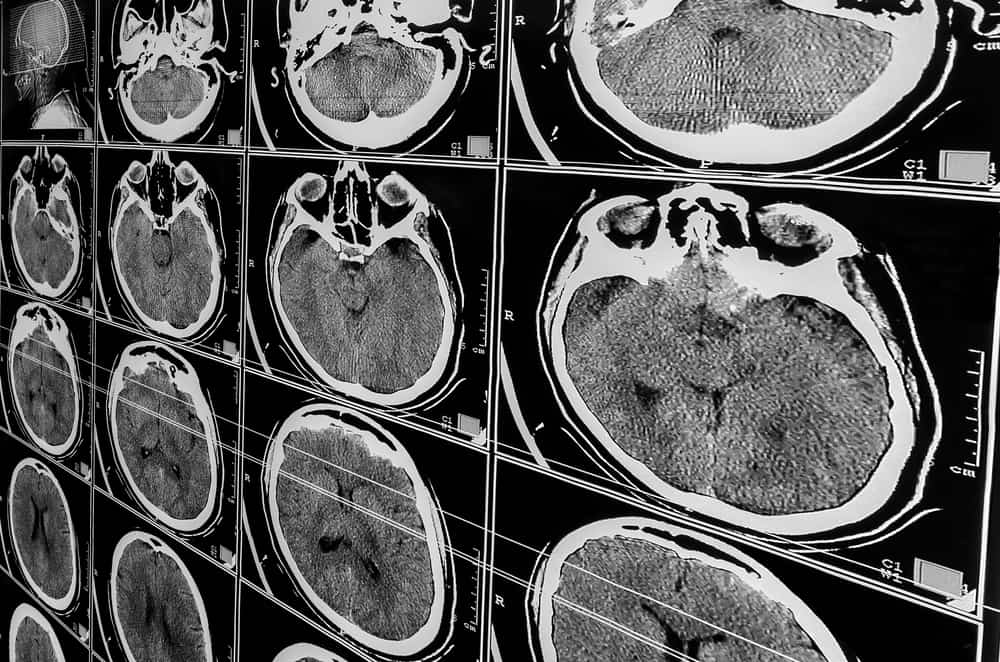
Here is what many TBI victims do not learn until months after the injury: a normal CT scan or MRI does not rule out a traumatic brain injury. Standard emergency imaging has documented limitations in detecting the injury types that produce lasting cognitive and behavioral changes. The legal problem that creates is a documentation gap the insurer uses immediately.
In practice, this creates a documentation problem. The emergency room clears the patient based on the imaging. The discharge summary says no acute intracranial abnormality. The insurer gets that report and uses it to argue the injury is minor or fabricated. The victim goes home with functional changes that are not yet in any official record, with no documentation that connects those changes to the crash.
Closing that gap requires the right diagnostic follow-up and the right timeline. Neuropsychological testing produces objective measures of cognitive function that emergency room imaging does not capture. Additional diagnostic evaluation, pursued early, creates the medical record the legal claim depends on before the insurer builds its narrative around the initial clean result.
Our attorneys coordinate with treating neurologists and neuropsychological evaluators to ensure the diagnostic record matches the actual clinical picture. The primary reason this matters legally is that every specialist opinion and every damages projection flows from the underlying diagnosis.
A weak diagnostic record produces a weak damage case. We build the record from the start, which means retaining the right specialists early, not assembling evidence after the insurer has shaped the narrative using its own consultants.
Building the Long-Term Damages Case
A Bergen County TBI claim covers medical costs, future rehabilitation, lost earning capacity, and non-economic damages across a timeline that can extend years beyond the accident. Each category requires specific documentation and projection to capture the full scope of the loss.
Medical expenses, present and future. Current costs include emergency care, hospitalization, imaging, specialist consultations, and ongoing rehabilitation. Future costs include continued neurological care, specialized rehabilitation, and any assistive technology or home modification the injury requires. We work with life care planners who project these costs over the full relevant period.
Lost earning capacity. For TBI victims who cannot return to their prior occupation, the financial impact extends decades. A vocational rehabilitation consultant evaluates what work, if any, the injured person can realistically perform. An economist then calculates the present value of the earnings gap between the prior career trajectory and the post-injury reality. This projection often represents the largest single component of a TBI damages case.
Non-economic damages. New Jersey permits recovery for pain and suffering, emotional distress, loss of enjoyment of life, and the loss of consortium experienced by a spouse or family member. In TBI cases, where personality changes and cognitive impairment fundamentally alter relationships and self-identity, these damages carry significant weight.
We document them through the victim’s own account, family testimony, and clinical observations from treating providers. A spouse describing how their partner changed, a supervisor documenting the performance decline, or a friend testifying to the loss of the person they knew all build a damages narrative that numbers alone cannot convey.
Punitive damages. In cases involving gross negligence, such as a drunk driver or a property owner who ignored documented safety hazards, punitive damages may be available beyond compensatory recovery. We evaluate this at the outset and preserve the argument through discovery.
New Jersey Law and the TBI Filing Timeline
The standard personal injury statute of limitations in New Jersey runs two years from the date of injury under N.J. Stat. § 2A:14-2. In TBI cases, that deadline can operate differently than in other personal injury claims, and understanding the exceptions matters.
New Jersey’s discovery rule allows the limitations clock to start from the date the injury was discovered, or reasonably should have been discovered, rather than the date of the accident. For TBI victims who received a clean imaging result at the emergency room and did not receive a formal diagnosis until weeks or months later, this rule can extend the filing window.
Under N.J. Stat. § 2A:14-21, if the injured person is legally mentally incapacitated at the time of the injury to the degree that they cannot understand their legal rights or initiate a lawsuit, the statute of limitations does not begin to run until that incapacity ends. This provision applies directly to severe TBI cases where the victim spends time in a diminished cognitive state following the injury.
One exception that catches families off guard: if the at-fault party is a government entity, a public school, or a municipal employee acting in their official capacity, New Jersey’s Tort Claims Act requires written notice filed within 90 days of the injury. That 90-day clock runs regardless of the discovery rule and regardless of the severity of the injury. Miss it, and the claim against that entity is barred.
Verdicts and Settlements
$750,000 - Struck During Lane Change
Driver was hit during an attempted lane change on the approach to the George Washington bridge. She required multiple surgeries. She was out of work for 9 months.
$425,000 - Fall From Ladder
Settlement under the New York Labor Law for a fall from a ladder by worker who suffered severe back injury.
$500,000 - Fall from Operating Table
While unconscious following pilonidal cyst surgery, a young man was caused to fall from operating table, suffering tears of his labrum resulting in termination of his high school sports.
Frequently Asked Questions
What is the difference between a concussion and a traumatic brain injury?
A concussion is a form of traumatic brain injury. In clinical settings, “mild TBI” and “concussion” are often used interchangeably, but mild does not mean insignificant. Repeated concussions or inadequate recovery time can produce lasting effects. The severity classification matters for medical treatment, but does not define the legal value of the claim.
Can I still bring a TBI claim if I was not unconscious at the time of the crash?
Yes. Loss of consciousness is not required for a TBI diagnosis or a legal claim. Many cases involve brief disorientation or confusion at the time of impact with no complete blackout. Courts and juries recognize this. The clinical diagnosis and the documented progression of cognitive and behavioral changes drive the claim.
How do I prove a TBI when my initial imaging was normal?
Normal CT and MRI results do not eliminate a TBI claim. The right diagnostic follow-up documents the injury through measures that emergency imaging does not capture. An attorney who regularly handles TBI claims knows which evaluations to pursue early and how to present those findings to counter the insurer’s clean-scan argument, the diagnostic record drives every damages projection that follows.
What if the TBI symptoms worsen over time after the settlement?
Once a case settles, the release bars future claims from that incident. TBI cases should not settle until the injured person reaches maximum medical improvement and the long-term prognosis can be projected with reasonable confidence. Our attorneys hold settlements until the medical picture is complete enough to capture the full extent of damages.
Can a family member bring a claim for the impact the TBI has had on them?
Yes. New Jersey law allows a spouse to file a loss of consortium claim alongside the primary TBI claim. Loss of consortium addresses the disruption to the marital relationship caused by the injury, including changes in companionship and the practical burdens placed on the non-injured spouse. In severe TBI cases, this component carries real and documentable value.
Speak With a Hackensack TBI Attorney Before the Evidence Changes
Traumatic brain injury cases are won or lost in the early stages of medical documentation and legal investigation. The diagnostic record built in the weeks following the injury shapes every specialist opinion that follows. The evidence from the accident scene degrades quickly. The window to act is narrow and matters more in TBI cases than in almost any other category of personal injury claim.
Maggiano DiGirolamo & Lizzi maintains its Hackensack office at 21 Main Street, Suite 203, one block from Bergen County Superior Court. Our attorneys handle catastrophic injury claims across Bergen County and appear regularly before the judges who decide these cases.
The consultation is free, and the fee structure is contingency-based, meaning no cost unless we recover. Families dealing with a severe TBI often call on behalf of an injured person who cannot manage the legal process independently. We handle those situations and make the process as straightforward as the injury allows. Call a Hackensack traumatic brain injury attorney at Maggiano DiGirolamo & Lizzi now at 201-585-9111.